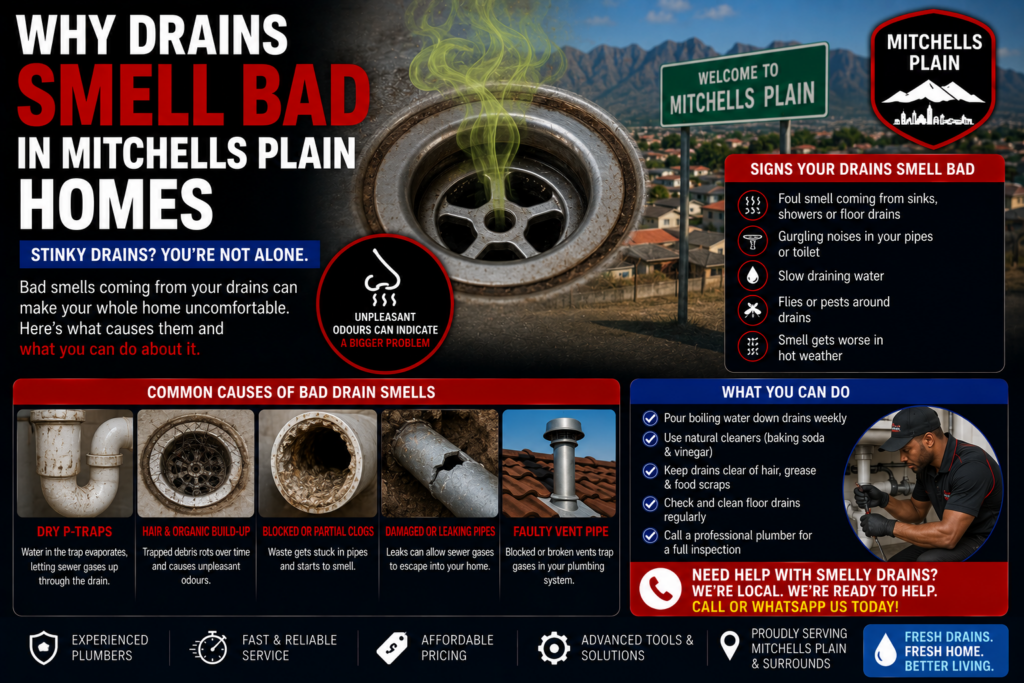
Why Drains Smell Bad in Mitchells Plain Homes
Few household problems are as unpleasant as a bad drain smell. Whether the odour is coming from a kitchen sink, bathroom basin, shower drain, floor drain, or toilet area, unpleasant smells often indicate that something within the plumbing system requires attention.
Many homeowners assume that drain odours are simply part of living in an older home. However, persistent smells are usually warning signs of an underlying plumbing issue. In many cases, the problem can be fixed easily if it is identified early. If ignored, the issue may eventually develop into a blocked drain, sewer backup, leak, or more expensive plumbing repair.
Across Mitchells Plain, drain odours are commonly caused by grease buildup, trapped waste, blocked drainage systems, dry drain traps, sewer gas problems, or hidden plumbing faults. The exact cause often depends on where the smell originates and how long it has been present.
Understanding what causes these smells can help homeowners take action before the situation becomes more serious.
Grease and Food Buildup Inside Kitchen Drains
One of the most common causes of unpleasant drain smells is grease and food waste accumulating inside kitchen drain pipes. Even when homeowners avoid pouring large amounts of oil down the sink, small amounts of grease from washing dishes can gradually coat the inside of the pipes.
As grease builds up, food particles become trapped. Over time, these materials begin decomposing and produce unpleasant odours that travel back through the sink drain.
Common warning signs include foul smells when running water, slow draining sinks, recurring blockages, and unpleasant odours that become stronger during warmer weather.
Regular cleaning and professional drain maintenance can help prevent this buildup from becoming a larger blockage.
Blocked Drains Often Create Strong Odours
Blocked drains do not always stop water flow completely. Many blockages begin as partial restrictions that allow water to drain slowly while trapping waste materials inside the pipework.
Hair, soap residue, grease, food waste, and other debris accumulate around the blockage. As these materials break down, they release unpleasant smells that travel back through the plumbing system.
Homeowners often notice the smell before they notice the slow drainage. This is why bad odours can sometimes be one of the earliest warning signs of a developing blockage.
If the smell is accompanied by slow drainage, gurgling sounds, or recurring backups, professional blocked drain services in Mitchells Plain may be required.
Dry Drain Traps and Sewer Gas Problems
Many homeowners are surprised to learn that every sink, shower, bath, and floor drain contains a trap designed to hold a small amount of water. This water creates a seal that prevents sewer gases from travelling back into the home.
When a drain is not used for a long period, the water inside the trap can evaporate. Once the trap dries out, sewer gases can enter the room and create strong unpleasant smells.
This is especially common in guest bathrooms, outside drains, unused showers, and secondary bathrooms that are not used regularly.
Fortunately, this problem is often solved by simply running water through the affected drain to restore the protective water seal.
Bathroom Drain Smells Are Often Different From Kitchen Drain Smells
Not all drain odours have the same cause. Bathroom drains often develop smells due to hair buildup, soap residue, toothpaste deposits, and organic waste trapped within the pipework.
Over time, these materials accumulate and begin decomposing inside the drain system. The resulting odours are often strongest near shower drains and bathroom basins.
Because bathroom blockages usually develop slowly, many homeowners ignore the smell until drainage performance starts deteriorating.
Sewer Line Problems Can Produce Strong Smells
In some situations, drain odours originate from the property’s sewer line rather than the internal plumbing system. Sewer line issues are more serious because they can eventually lead to backups, overflows, and sanitation problems.
Signs that the smell may be related to the sewer line include multiple drains smelling at once, recurring blockages throughout the property, gurgling toilets, and strong sewage odours around outdoor drains.
These warning signs should never be ignored because they often indicate a developing drainage system problem.
Vent Pipe Problems Can Affect Drain Odours
Modern plumbing systems rely on vent pipes to regulate air pressure and safely release sewer gases above the roofline. If these vents become blocked by debris, nests, or other obstructions, gases may not escape properly.
When this happens, unpleasant smells can become trapped within the drainage system and may begin entering the home through sinks, baths, or floor drains.
Vent issues are often difficult for homeowners to diagnose without professional inspection because the problem usually occurs above roof level.
Can Drain Smells Become a Health Concern?
While minor drain odours are usually not dangerous, persistent sewer gas smells should not be ignored. Certain sewer gases can cause discomfort, headaches, nausea, and poor indoor air quality when present in large concentrations.
In addition, ongoing moisture and organic buildup within drains can encourage bacterial growth, making the home environment less hygienic.
If smells are strong, persistent, or becoming worse over time, professional investigation is recommended.
How Professional Plumbers Diagnose Drain Smells
Finding the true source of drain odours often requires more than simply cleaning a drain opening. Professional plumbers investigate the entire drainage system to determine where the smell originates.
This may involve checking traps, testing drainage flow, inspecting vent systems, identifying partial blockages, and evaluating sewer line performance.
Because multiple plumbing issues can create similar smells, proper diagnosis is essential for long-term results.
How to Prevent Drain Smells in the Future
Preventing drain odours is often much easier than fixing a major blockage later. Good plumbing habits can significantly reduce the risk of unpleasant smells developing.
- Avoid pouring grease down kitchen sinks
- Use drain strainers to catch debris
- Run water through rarely used drains
- Address slow drainage early
- Schedule periodic plumbing inspections
These simple preventative measures help keep drainage systems clean, efficient, and odour free.
Final Thoughts
Bad drain smells are usually warning signs that something within the plumbing system requires attention. While some causes are minor, others can indicate developing blockages, sewer problems, or hidden plumbing faults.
Addressing the issue early helps prevent larger plumbing repairs, improves indoor air quality, and keeps your drainage system functioning properly.